Day 2: Novena in Preparation to Celebrate the Solemnity of the Assumption

As we prepare to celebrate our patronal feast, Mary Assumed into Heaven, each day of our novena clergy of the Archdiocese of Cape Town will offer reflections on Our Lady.

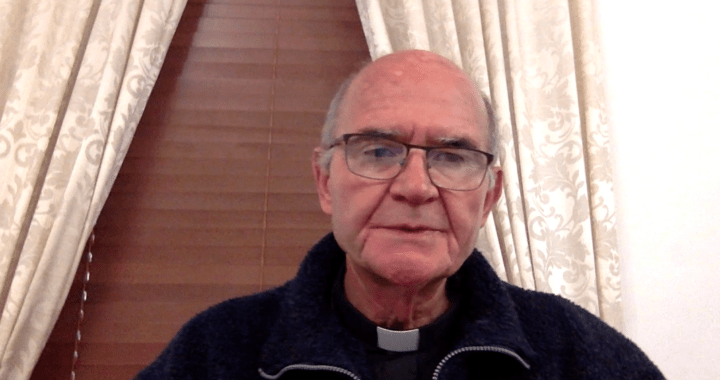
In this reflection for Sunday, 8 August, Bishop Frank de Gouveia,  reflects on when and why she become Patroness of South Africa?.

This video is also available on the Archdiocese of Cape Town’s Facebook page and YouTube channel. Please share these daily reflections on your parish WhatsApp groups and other social media platforms.

The text of the video is provided below, especially for those who are deaf.

“Welcome to this novena reflection as we prepare to celebrate the Assumption of Mary, Patroness of South Africa. Today we focus on: “When and why Mary Assumed into Heaven, became Patroness of South Africa”? 

When, in 1950 Pope Pius XII formally defined and promulgated the dogma that Mary, “was taken up body and soul into the glory of heaven”, he hoped that this would be of pastoral benefit for the people of God. And so in the encyclical which he wrote at the time, he says: 

“It is to be hoped that from meditation on the glorious example of Mary [people] may come to realize more and more the value of a human life entirely dedicated to fulfilling the will of the Heavenly Father and to caring for the welfare of others.”

Human life is sacred. Caring for the welfare of others is of prime importance. God created us all to know, love and serve him. Mary dedicated her whole life, body and soul, to carrying out God’s plan. And so at the end of her life on earth she was taken up body and soul into heaven.

The human person, the human body, is created by God, redeemed by Jesus Christ and destined for glory. In 1950 the world needed to hear this message proclaimed loud and clear

People were still coming to terms with the devastating effects of World War II in which 75 million people lost their lives. The majority of these were civilians. Nazi Germany, as part of a deliberate programme of extermination, systematically killed over 11 million people including 6 million Jews. The world was shocked. How could we do this to one another? How will we recover?

The Church’s answer was: Look to Mary. Follow her example. Be obedient to God and carry out God’s intentions for the human race. Value human life. Respect the dignity of all. Be concerned for their welfare, their well-being. 

At about the same time in South Africa, new apartheid laws were being promulgated. In 1951 Pope Pius XII established the hierarchy of the Church in southern Africa, and the following year 1952, the Bishops’ Conference issued its first pronouncement against racism. Clearly we in South Africa needed to hear the same message the world received with the promulgation of the dogma of the Assumption. In May 1952 Pope Pius XII proclaimed Our Lady Assumed into Heaven as patroness of South Africa. This was celebrated at a Marian Congress held in Durban to mark the centenary of the arrival of the first missionaries of the Oblates of Mary Immaculate.

And so today in 2021, in the midst of a pandemic, in the aftermath of rioting and looting in KwaZulu Natal and Gauteng, and taxi wars in the Western Cape, may we follow the example of Mary and come to realize more and more the value of a human life entirely dedicated to fulfilling the will of God and to caring for the welfare of others.

We conclude with part of the prayer prayed in 1952 when South Africa was consecrated to Mary assumed into Heaven.

O Queen, assumed into Heaven, with one voice we acclaim you our Heavenly Patroness, and with filial love we consecrate to you our country and our people. Through your prayers, O gracious Mother, may your Son be known and loved throughout South Africa; may His Kingdom flourish in our land, a Kingdom of justice, truth and peace. Teach us to follow in His footsteps, firm in the faith, obedient to His law, subjecting soul and body to His holy sway; that when our mortal life is ended, we may gaze upon His face in Heaven and share, as you, O blessed Mother, do already, the glory of His Resurrection. Amen.

Day 1: Novena in Preparation to Celebrate the Solemnity of the Assumption

As we prepare to celebrate our patronal feast, Mary Assumed into Heaven, each day of our novena clergy of the Archdiocese of Cape Town will offer reflections on Our Lady.

In this reflection for Saturday, 7 August, Bishop Sylvester David OMI,  reflects on the meaning and significance of this feast.

This video is also available on the Archdiocese of Cape Town’s Facebook page and YouTube channel. Please share these daily reflections on your parish WhatsApp groups and other platforms.

The text of the video is also offered below, for those who are deaf.

Bishop S. David OMI. Reflection on the Solemnity of the Assumption

This solemnity has a lot more to do with us than we realise. It celebrates the fulfilment of the promise that those who are faithful to Christ will share eternity with him. 

The gospel text for the feast itself is that of the Visitation. Mary had just made her first communion – she had received Jesus for the first time. And what does she do? She makes haste and goes on a missionary journey which brings so much joy to an older woman that even the child in the older one leaps for joy. How nice if we could bring joy to others like that. It is often said that there is a child in each of us. This inner child represents innocence, helplessness and the ability to say it like it is. Think of how many of our complexes would be resolved if this child is allowed to articulate itself from time to time.

I think it is important to note how our Gospel text starts: the original states ‘arising in those days Mary went to the hill country …’ The attentive Bible reader will note that the word arising is in fact a resurrection word and will know that as soon as Mary said yes to God she started to share in the resurrection. Mary being assumed into heaven should come as no surprise to us. Next the attentive bible reader will ask: ‘in which days?’ and if attentive enough will realise that the phrase ‘in those days’ is a formula which introduces the new covenant in Jeremiah 31. In fact, that formula occurs four times in the context of the new covenant. It signals the promise of new blessings, restoration to the Promised Land, and a new and more intimate relationship with God. The Bible reader will then realise that the time for the fulfilment of the new covenant has come. In the annunciation and the word taking flesh God is fulfilling the ancient promises. Do you think it is mere coincidence that the new covenant is quoted verbatim and in its entirety when the priestly work of Jesus Christ is described in the 8th chapter of Hebrews? 

Elizabeth’s response would remind the attentive Bible reader of what David said when the ark of the first covenant was brought to him: ‘why should the ark of the Lord be brought to me?’ Now Elizabeth asks why the ark of the new covenant should be brought to her. God is indeed doing something new. What a pity it would be if we do not embrace this newness. 

I wish you a joyful celebration of the fulfilment of God’s promise in your own life, in your own family and in our Archdiocese.

Prayer and Reflection by Bishop Sylvester David OMI

Auxiliary Bishop Sylvester David offers his prayer and reflection for the people of the Archdiocese of Cape Town for today, Friday 6 August 2021, during this time of the Coronavirus pandemic. It is also available on the Archdiocese of Cape Town’s Facebook page and YouTube channel. Please also see below the text of his reflection, primarily for the deaf.

Friday 6 August 2021. The transfiguration. Mark 9:2-10. 

I once again wish to start by saying the prayer for peace in Southern Africa:

O God of justice and love, bless us, the people of Southern Africa,
and help us to live in your peace.

Lord, make me an instrument of your peace:
Where there is hatred, let me sow love;
Where there is injury; let me sow pardon;
Where there is discord, let me sow harmony.

Divine Master, grant that I may not so much
Seek to be understood, as to understand;
To be loved, as to love;
To receive sympathy, as to give it;

For it is in giving that we shall receive,
In pardoning that we shall be pardoned,
In forgetting ourselves that we shall find
Unending peace with others.

We ask this through Christ Our Lord. Amen.

We are encouraged to pray the peace prayer often. 

Chaos, disfiguration and the need for a new creation

I recently read a book on the second half of life entitled “This Blessed Mess”. The opening line simply reads: ‘This book is about struggle’. The author goes on to describe the chaos of living in present day society. The occupants of our global village experience chaos and upheaval comprising the horrors of Covid 19, heat waves which claim lives, unseasonal rains and massive flooding. Recently we have also been experiencing forest fires of apocalyptic proportions either displacing people or killing them. All this makes life uncertain and our insecurities are heightened. Add to this the human complicity in wars, state capture, looting, the instigating of political violence, substance abuse, ecological damage, racism, violence, abuse of children and vulnerable persons, the abuse of animals though poaching and abandonment, and nuclear proliferation; and it becomes easy to see why this chaos so easily overwhelms us. 

Biblically chaos is the opposite of creation. It is raw unformed energy and because it lacks shape and form it is totally unpredictable. The original chaos was transformed into life giving energy which we call creation – ‘… and God saw that it was good’. But the litany of disasters listed above shows that this good world has been disfigured. To the extent that we have contributed to the pollution and negativity then we too have become disfigured. This is why the remembrance of the transfiguration and commitment to its values are so important. We need to get back to the mountain of revelation and listen again to the voice of faith. Moses challenges us with the Genesis narrative and Elijah reminds us of the prophetic task of challenging the status quo which makes a profit out of uncontrollable consumerism. Jesus challenges us to again seek the path that leads to God – and the Father not to be silenced, reminds us that the way of Jesus is correct and that we ought to listen to him. In short the reading of the transfiguration event challenges us to re-engage with the work of bringing order out of chaos. What this calls for is for us to commit ourselves to the “new heavens and the new earth” (Isaiah 65:17, 66:22, 2 Peter 3:13; Revelation 21:1). 

The Gospel text is a beautiful composition – woven like a tapestry enriched with OT threads. In praying the text an important aspect nourished me. After their prayer experience (it was a prayer experience if we look at the original text) and the Divine voice requested them to listen to Jesus, the three Apostles looked up and saw “only Jesus”. How nice if our prayer experiences could end in such a way – that we look up and see only Jesus. For that to happen, we need to be open, honest, and willing to acknowledge that we are in need of redemption.

Let us pray: Lord, we turn to you in our time of need. Help us to reconstitute ourselves as a transfigured human community after the violence that has disfigured us in recent weeks. Remove all notions of hatred and vengeance from among us. We are still in the midst of a frightening pandemic and look to you to once again to speak your creative word in our hearts, our families, our Church and our world. We make our prayer through Christ our Lord. Amen.

Bishop Sylvester David OMI
VG/Auxiliary Bishop of Cape Town

Prayer and Reflection by Archbishop Stephen Brislin

Archbishop Stephen Brislin offers his prayer and reflection for the people of the Archdiocese of Cape Town for today, Wednesday 4 August 2021, during this time of the coronavirus pandemic. It is also available on the Archdiocese of Cape Town’s Facebook page and YouTube channel. Please also see below the text of his reflection, primarily for the deaf.


Welcome to all who are joining this reflection. Today is the feast day of St John Mary Vianney who is the Patron Saint of Parish Priests, and so I take this opportunity of wishing all priests a blessed feast day. My prayer for you is that you will experience deep joy and happiness in your vocation to the priesthood. In these difficult and uncertain times, let us begin by praying for Southern Africa:

O God of justice and love, bless us, the people of Southern Africa,
and help us to
live in your peace.

Lord, make me an instrument of your peace:
Where there is hatred, let me sow love;
Where there is injury; let me sow pardon;
Where there is discord, let me sow harmony.

Divine Master, grant that I may not so much
Seek to be understood, as to understand;
To be loved, as to love;
To receive sympathy, as to give it;
For it is in giving that we shall receive,
In pardoning that we shall be pardoned,
In forgetting ourselves that we shall find
Unending peace with others. 

We ask this through Christ Our Lord, Amen.

I have taken the Scripture excerpt from today’s Mass, from the Book of Numbers (13:1-2,25-14:1,26-29,34-35)

At the end of forty days they returned from spying out the land. And they came to Moses and Aaron and to all the congregation of the sons of Israel in the wilderness of Par’an, at Ka’desh; they brought back word to them and to all the congregation, and showed them the fruit of the land. And they told him, “We came to the land to which you sent us; it flows with milk and honey, and this is its fruit. Yet the people who dwell in the land are strong, and the cities are fortified and very large.

We all know that, after leaving Egypt, the Israelites spent 40 years in the desert before entering the Promised Land, the land flowing with ‘milk and honey’. We are reminded in the First Reading of today’s Mass that they could have gone into the Promised Land much sooner, but some members of the group that had been sent to “spy out the land” were fearful and so they gave an evil report of the land and stirred people up against entering into it. The Lord heard their complaint, turned them back, said that for every day that the reconnaissance group had spent in the Promised Land, the Israelites would spend a year in the desert. Since the spies had been away for forty days, the Israelites were to spend 40 years wandering in the desert. Furthermore, the Lord decreed that not one of them 20 years and older who had complained against the Lord would reach the Promised Land but they would die in the desert – the only exceptions ere Joshua and Caleb who had been honest in the report they gave.

We can understand this event and its consequences in two ways. We could think of it as God punishing the Israelites for their lack of faith in him and the fact that they were always complaining against him. Or we could see, not as a punishment from God, but as a natural consequence of doubting and succumbing to fear. I tend towards the second understanding. I think that we humans are so often the cause of our own misery, and the masters of our own unhappiness. We tend to blame fate, other people or even God when things go wrong. Often, though, things have gone wrong because of the choices we have made and for which we are responsible. The amazing thing about being human is that we do have a choice, even when terrible things have happened to us, we have a choice as to how we respond and also whether we are going to allow those terrible things to have continual power over us and our happiness. Sometimes we live with things that happened years ago and which still cause us upset and hurt. We may need support and accompaniment in getting over such things, but a lot also depends on whether we choose to let go.

The Israelites gave in to fear. Fear can be a life saver – if you meet a tiger escaped from the zoo in your back garden, fear is an appropriate response and will prevent you from giving into the temptation to pat the tiger on the head – it might well save your life. The problem only arises when we allow fear to govern us and to determine our actions, preventing us from doing what is right. St John teaches us that love drives out all fear (1 John 4:18) and when love rules us we will be able to choose the right course of action even when we feel afraid. Love was the motivating force for the martyrs and saints who continued to do good in the face of opposition and persecution. Our love must ensure that, when it comes to doing what is right, we do not become paralysed by fear.

The failure of the Israelites to enter the Promised Land at the time led to great hardship and suffering for them. Ten of the twelve who had been sent to spy on the land gave in to the fear and they gave a negative and exaggerated report on the land. In a way I find it comforting to know that fake news is not something that has just started happening – it has been around since time immemorial. But we do see the consequences of fake news and learn from it – even today, fake news can and does divide people, instills unnecessary fear in people, and causes them to react negatively. The propagators of fake news find it easy to manipulate people for their own purposes and, just as the ten lying spies did, to cause a sense of mass terror and frenzy.

The event of the first arrival of the Israelites at the brink of the Promised Land is a wonderful account with many rich lessons. It emphasises the need to have faith and trust in God, even in the most difficult of times, and allow ourselves to be led by him. It calls us to respond to the Lord’s injunction to “stand firm”, as he will do the fighting on our behalf. Again we respond to his words, “be not afraid”. It reminds us that hardship and unhappiness often comes to us through the choices we ourselves make, rather than as a punishment from God, or because of other people’s mistakes. It re-affirms our belief that truth is the only way to real progress, justice and peace. Adopting falsehood will only divide people, cause them to act erroneously and will result in increased suffering. Finally, this event reminds us of the power of love which conquers fear and negativity. We open our hearts to God’s love and offer our love to him. In the words of Saint Teresa of Calcutta, “Love Him trustfully without looking back, without fear. Give yourself fully to Jesus. He will use you to accomplish great things on the condition that you believe much more in His Love than in your weaknesses.

Let us now pray for God’s blessing:

The Lord be with you R/ And with your Spirit

Bow down for the blessing:

Heavenly Father, we thank you for the priests who minister in the Archdiocese of Cape Town and we pray for a special blessing on them today. Bless, too, all your people, Lord, that like St John Vianney, they will persevere in faith no matter what obstacles they encounter and that they will always be faithful to you. Through Christ our Lord, amen

May Almighty God bless you, the Father and the Son and the Holy Spirit (+), amen.

Prayer and Reflection by Bishop Sylvester David OMI

Auxiliary Bishop Sylvester David offers his prayer and reflection for the people of the Archdiocese of Cape Town for today, Friday 30 July 2021, during this time of the Coronavirus pandemic. It is also available on the Archdiocese of Cape Town’s Facebook page and YouTube channel. Please also see below the text of his reflection, primarily for the deaf.

Reflection for Friday 30 July 2021. Freedom to love. Text for reflection – John 13:34-35.

I would like to start by praying for peace in Southern Africa:

O God of justice and love, bless us, the people of Southern Africa,
and help us to live in your peace.

Lord, make me an instrument of your peace:
Where there is hatred, let me sow love;
Where there is injury; let me sow pardon;
Where there is discord, let me sow harmony.

Divine Master, grant that I may not so much
Seek to be understood, as to understand;
To be loved, as to love;
To receive sympathy, as to give it;

For it is in giving that we shall receive,
In pardoning that we shall be pardoned,
In forgetting ourselves that we shall find
Unending peace with others.

We ask this through Christ Our Lord. Amen.

During this time of unrest, mistrust and now rebuilding, let us pray more often and more fervently.

The text I wish to comment on comes from the command Jesus gave us to love one another. I was reminded of this text through one of the intercessions (the third one) for the Church’s morning prayer for today viz. “Guide our thoughts, our words, our actions: so that what we do today may be pleasing to you.” 

How do we live out this intercession which we pray? The answer is that we live it out in our relationships with the neighbour. Our love of the neighbour does not exist in a vacuum nor in attractive sayings that one finds on greeting cards. It is a lot more practical, and in its essence, is what discipleship is all about. It is always embedded in a context and speaks to every occasion. What then is our context? Or to put it scripturally, what is the mood of this time (cf. Ecclesiastes 3)?

On 25 July 2021, President Ramaphosa announced an easing of the Lockdown restrictions. We moved from Level Four to Level Three. We now have greater freedom. But with greater freedom comes greater responsibility. Freedom after all, is not freedom to do just anything – it is freedom to do the right thing. The right thing at this time is to exercise the Church’s teachings about being pro-life. In this regard, the text of Deuteronomy 30:15-20 is very significant. The very fact that we can now gather – albeit in limited numbers, does not mean that we are free to do as we like. In Christian terms we have to make sacrifice for the neighbour. 

Freedom without corresponding responsibility is not freedom simply because in the context of a pandemic it can lead to an uncontrolled spread of the virus which has now mutated into a rapidly transmissible and destructive force. The very fact that we can gather compels us to act with greater responsibility. Even with the restrictions, during the last week of Lockdown Level Four we have received reports of several infections among the laity and several priests have also tested positive. Mahatma Gandhi noted that: “The best way to find yourself is to lose yourself in the service of others.” Last week when I commented on our moral responsibility to keep the neighbour safe, I noted: “Accountability before God to whom our sacrifice is offered, is also accountability before the neighbour. The first question to fly into the face of the creator came from the murderous Cain: ‘Am I my brother’s keeper?’ And throughout the bible God’s answer is a definite ‘Yes – you are your brother’s keeper. You are your sister’s keeper’.”

When speaking of this time of infections, medical scientists have informed us that we are called to exercise responsibility now so that we can have a brighter future. With the increased roll out of the vaccine there is a sense of optimism – so it is not all doom and gloom. We do what we have to at this time so as to achieve liberation in the future. Jesus uses the analogy of suffering so as to achieve greater joy in John 16:21. In Matthew 22:37-39, he sums up the love of neighbour as a great commandment. It is after all by our love that we will be recognised as his disciples (cf. John 13:34-35). The word for love in this verse indicates a self sacrificial love lived out for the good of the neighbour.

Let us pray: Merciful God, right now we experience pain and suffering. We have no one but you to turn to for relief for ourselves and our loved ones. Send us your Spirit to teach us how to cope, so that we may keep ourselves and each other safe. Grant us the serenity to accept the things we cannot change, the courage to change the things we can, and the wisdom to know the difference. Lord, above all give us the gifts of patience and perseverance. We ask this through Christ our Lord. Amen.

Bishop Sylvester David OMI
VG/Auxiliary Bishop of Cape Town

Devotion to St Joseph with Fr Shaun Addinall

Pope Francis declared the Year of St Joseph, running from 8 December 2020 to 8 December 2021. This is a rare opportunity for us to focus on this great man who is often described as “standing in the shadows”. Joseph becomes our guide to visit the important moments of the life of Mary and the childhood of Jesus. Though operating in obscurity, Joseph leads us to a deeper understanding of Church, work, family, husband, fatherhood and prayer as we delve into some important aspects of his life. Every time we do we this have a refreshing encounter with who we are as Church in the world today. As this is also the Year of the Eucharist, Benediction forms an integral part of our devotions.

This year is an invitation by Pope Francis to celebrate St Joseph. It is an opportunity that the Church and the faithful should appropriate fully. 

Fr Shaun Addinall presents the sixth of the monthly reflections. It is titled: St Joseph the Family Man and will be livestreamed to Good Shepherd Bothasig YouTube channel on 3 August 2021 from 7.00 pm-7.30 pm. 

The livestream link is: https://www.youtube.com/channel/UCnj6J2Sc_dW058_zPCSA4zw

Prayer and Reflection by Archbishop Stephen Brislin

Archbishop Stephen Brislin offers his prayer and reflection for the people of the Archdiocese of Cape Town for today, Wednesday 28 July 2021, during this time of the coronavirus pandemic. It is also available on the Archdiocese of Cape Town’s Facebook page and YouTube channel. Please also see below the text of his reflection, primarily for the deaf.

Welcome to this reflection. Let’s start by praying the Prayer for Southern Africa:

O! God of justice and love, bless us, the people of Southern Africa, and help us to
live in your peace.
Lord, make me an instrument of your peace:
Where there is hatred, let me sow love;
Where there is injury; let me sow pardon;
Where there is discord, let me sow harmony.
Divine Master, grant that I may not so much
Seek to be understood, as to understand;
To be loved, as to love;
To receive sympathy, as to give it;
For it is in giving that we shall receive,
In pardoning that we shall be pardoned,
In forgetting ourselves that we shall find
Unending peace with others. We ask this through Christ Our Lord, Amen.

The Reading I have chosen for today is the Gospel of today’s Mass (Matthew 13:44-46):

“The kingdom of heaven is like treasure hidden in a field, which a man found and covered up; then in his joy he goes and sells all that he has and buys that field. “Again, the kingdom of heaven is like a merchant in search of fine pearls, who, on finding one pearl of great value, went and sold all that he had and bought it”.

In Chapter 13 of St Matthew’s Gospel there are a number of successive parables explaining the nature of the God’s Kingdom. St Matthew begins with the parable of the sower which is about those who “hear the word of the kingdom” but receive it in different ways, and then the parable of the weeds among the wheat. He compares the Kingdom to a mustard seed, to leaven (yeast) and to a net thrown into the sea to catch fish. The chapter ends with people rejecting him, saying “Where did this man get this wisdom and these mighty works? Is not this the carpenter’s son?” Jesus is amazed at their unbelief and notes that a prophet is not without honour except in his own country. We are told that he could do many mighty works there due to their unbelief.

The Kingdom of heaven, or as it is referred to in other places in the Scriptures, the Kingdom of God, is central to the life and mission of Jesus – he came to proclaim the kingdom, which he says is “at hand” (Matt 4:17). His preaching, teaching, miracles and his prayer are all oriented towards God’s Kingdom. For this reason, St John always refers to Jesus’ miracles as “signs” and not as miracles, because he wishes us to understand that the mighty works Jesus performed were not to be understood merely as super natural events in the material realm (as amazing as they were). Rather, they all point and teach us about a much deeper reality of which they are merely the physical manifestation. We could even say that his miracles are sacramental. They point to the glory, majesty and power of God working through the Messiah, Jesus Christ. They are revelations of God and the promise of the restoration of Creation to its original beauty and innocence. They teach us of Jesus, “the light of the world” (John 8:12), of Jesus who is the “resurrection and the life” (John 11:25) and that no-one can come to the Father except through him (John 14:6). The proclamation of the Kingdom is accompanied by the call to conversion, to repentance, to turn once more to God and away from all that is sin and does not belong to God. It is a call to righteousness which embodies justice, honesty, truth, uprightness, harmony and, above all, love.

The centrality of Jesus’ proclamation of God’s Kingdom is captured in the two parables we heard in the Gospel passage I started with – a man who finds a treasure in a field sells all he has to buy the field in order to obtain the treasure, and the man who finds a pearl of great worth and who also sells everything he has in order to purchase it. The point is clear – there is nothing more important for anyone than the Kingdom of God. The Kingdom is the greatest treasure we can ever hope to have. It is the purpose and meaning of our existence – we should be able to “sell everything we have” in order to obtain it, and allow nothing in life to impede us from attaining it. remembering how Christ gave everything on the Cross, allowing his life to be poured out, in order to break open the gates of the Kingdom and so to restore us to friendship with the Father.

The proclamation of the Kingdom demands a response from us, the first of which is repentance and conversion, an abandonment of all that does not belong to the Kingdom, and equally to repent of our failure to do the works that would enhance the growth of God’s Kingdom. The second is to ensure that the word of the Kingdom is assimilated in our hearts and lives, that we are no longer only “hearers” of the Word but also “doers” of the word (James 1:22). The most important of all responses is to recognize the hope which Jesus’ teaching on the Kingdom of God offers to us. Despite all the evil in the world, and there is much evil, despite the hardships that we face personally and the anxieties we encounter, despite our lack of understanding, Jesus teaches us and assures us, that the Kingdom of God is at hand, it is in our midst and we belong to it. The goodness in the world may, at times, seem to be small (like a mustard seed) in the face of the darkness of evil, evil may seem to be triumphing over goodness (like the weeds among wheat), faith may seem to be dissipating or even disappearing (like the seed that falls on rocky ground or among thorns), but we await in hope for the new heavens and the new earth (cf. Revelation 21:1), of which we are already part and which already exists among us and is awaiting its final accomplishment.

Even in the dreadful looting and destruction that we witnessed recently in South Africa, there followed an outpouring of goodness as people turned out to clean up, to guard sensitive areas and to seek answers for and understanding of what had taken place. There has been a groundswell of concerned and good people calling for root causes to be identified and addressed, for the injustices of the inequality and poverty of our country to be recognized, and for the need to work for a true peace to be founded on the pillars of truth and justice. We may think that these “signs” are small in comparison, that they are, by and large, spoken about by mostly powerless people, but the signs – like the miracles of Jesus – indicate something far greater at work. God’s Spirit is working throughout the world.

This pandemic is and has been a horrible time for us. The socio-economic and political problems we face are enormous. But even in these horrible times we must see that they are part of the coming of God’s Kingdom and are leading us towards it, rather than happening in spite of God’s Kingdom. What we must ask ourselves is what we have to learn from the horribleness of the times, and what we must do to be instruments of God’s light in the darkness they have brought. So, far from giving in to despair, we face the present with hearts burning with the hope of God’s Kingdom and willing to persevere in being agents and instruments of God’s love and compassion in a world that is truly crying out in anguish for someone who cares.

Let us now pray for God’s blessing:

The Lord be with you R/ And with your Spirit

Bow down for the blessing:

Gracious and loving Father, you sent your only Son into the world to proclaim the Kingdom of God and to call mankind to conversion. Fill the hearts of your faithful with true repentance that they may receive the Kingdom of God within them. Through Christ our Lord, amen

May Almighty God bless you, the Father and the Son and the Holy Spirit (+), amen.

Prayer and Reflection by Bishop Sylvester David OMI

Auxiliary Bishop Sylvester David offers his prayer and reflection for the people of the Archdiocese of Cape Town for today, Friday 23 July 2021, during this time of the Coronavirus pandemic. It is also available on the Archdiocese of Cape Town’s Facebook page and YouTube channel. Please also see below the text of his reflection, primarily for the deaf.

Reflection for Friday 23 July 2021.

Our concluding prayer at Mass this week reads as follows:
“Graciously be present to your people, we pray, O Lord,
and lead those you have imbued with heavenly mysteries
to pass from former ways to newness of life.
Through Christ our Lord. Amen.”

It is easy to go through the proper of the Mass in a routine way and so run the risk of not seeing what the Church has in mind for us. The concluding prayer for Mass this week reminds us that the sacraments (heavenly mysteries) work by transforming us. Rather than work magic in our lives, the Eucharist strengthens and transforms us to face the challenges which come our way. The prayer is for the Lord to lead us “from former ways to newness of life”. 

In concrete terms in our struggle against the Covid 19 pandemic we have to show a change of lifestyle. Christians are called to model the right behaviour by embracing all the restrictions that have been recommended to us in order to prevent loss of life. The best way in which I can show love to those around me is to keep them safe.

St Paul in dealing with the consequences for those who have been justified by Christ (cf. Romans 1:16-17) has this to say: “I urge you, then, brothers, remembering the mercies of God, to offer your bodies as a living sacrifice, dedicated and acceptable to God; that is the kind of worship for you, as sensible people. Do not model your behaviour on the contemporary world, but let the renewing of your minds transform you, so that you may discern for yourselves what is the will of God what is good and acceptable and mature” (Romans 12:1-2).

The original text is most informative. Firstly, the offering of the bodies in Romans 12:1 has to be reasoned (translated as “sensible”) and not based on superstition, conspiracy theories and the like. Secondly, this is done collectively – in other words we do it with each other and for each other. Accountability before God to whom our sacrifice is offered, is also accountability before the neighbour. The first question to fly into the face of the creator came from the murderous Cain: “Am I my brother’s keeper?” And throughout the bible God’s answer is a definite “Yes – you are your brother’s keeper. You are your sister’s keeper”.

Romans 12:2 contains two imperatives – meaning that we cannot be Christian if we do not carry out these commands. Firstly we are asked not to model our behaviour on prevailing views. Secondly we are asked to let the renewing of our minds – in other words our conversion, transform us. So, we are not to conform to our favourite models but to transform ourselves. The NT term used to indicate this is the word from which we get the term “metamorphosis”. It refers to an authentic transformation. It is a genuine change willed by God. This means a revolution in terms of one’s behaviour so as to conform to the image of Christ. For the Christian this implies a tuning in to the action of the Spirit of God which dwells within. 

Our Archbishop’s call for us to experience a behaviour change in order to deal with Covid 19 is deeply rooted in Scripture.

Let us pray: Lord we turn to you in our need. Apart from the pandemic, we also suffer other struggles such as violence and hatred. We have seen the devastating effects of human greed but thankfully we also witness the greatness human kindness and endurance. Help us to practice the kind of behaviours which please you. May we offer ourselves in ways that are acceptable to you. We ask this through Christ our Lord. Amen.