Homily for the 24th Sunday of Ordinary Time
Introduction
The readings remind us that we have received God’s abundant mercy and therefore have a duty to forgive, even though we might not forget. We are to refuse to allow hurt to control our lives.
First Reading
The book of Sirach was written by Jesus Ben Sirach, a Jewish wisdom teacher in Jerusalem, in the early second century BC. He was concerned with helping ordinary people live faithfully and maintain ordinary community life. This passage comes in his teaching about relationship and addresses the sentiments of anger that might destroy our lives. He warns us that anger can be something that we can hold on to.
Whenever we are hurt, we may think we have the right to be angry when we remember words and actions against us, justifying our wanting to revenge. The longer we hold onto the sentiments the more they control us. The message is simply forgiving your neighbour and when you pray your sins will be forgiven.
Sirach connects our relationship with others to our relationship with God. When we ask mercy from God we must be willing to forgive others. The passage does not suggest that the wrong done to us is insignificant, nor does it mean that we have to pretend as if it were nothing, rather we choose to not to allow anger and revenge to have the final word.
Sirach asks us to remember the end of our short life. It is not worth carrying hatred for years on end. We can choose freedom by forgiving even if they did not apologize.
Is there someone who still brings anger into your heart? Bring that person to God that you may forgive. Perhaps forgiveness is not something I can accomplish in one moment, but we can always say, “Lord I am willing to forgive and to let go, help me to forgive.”
Second reading
In the second reading St. Paul highlights the profound truth that our lives do not belong to us alone, we belong to God. Whether we are alive or dead we belong to him. This came up during the discussion about food, what to eat and what not. Some believers were judging others in observing some practices.
Paul reminds them that Christ must be at the centre. This passage invites us to ask who is at the centre of my life, for sometimes we live as if life belongs to us, as if our plans, our achievements and reputation are in our hands. Can I not trust God with life or my situation, successes and even my fears? That is both a challenge and consolation at the same time.
Gospel
“I have forgiven that person but I will not forget what the person has done to me,” we may say. This is the hardest thing one can ever experience. A wound caused by a stranger may heal quickly, but a wound caused by someone you know and love may last for ablong time.
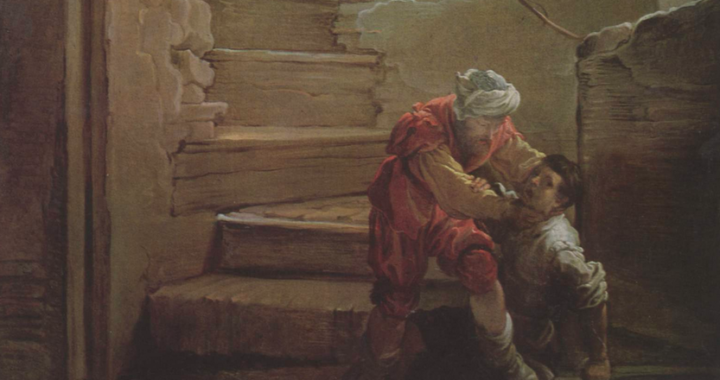
Peter asks Jesus how many times he should forgive, and he thinks he is being generous when he says seven times. Jesus says not seven times, rather seventy times seven, but he is really telling us to stop counting. Forgiveness is not a mathematical calculation. It comes from the abundant mercy that we have received from God.
Jesus tells the story of the servant who has received mercy and yet was not willing to forgive other small amounts of debts. We are called to show God’s mercy. When we refuse to forgive we are punishing the other person who hurt us. Often they don’t even think of the incident anymore, but we are still carrying it hoping that the other person will suffer, only to realize that we are hurting ourselves.
This is happening in marriages, families and religious life. You may be hurt by your superior, spouse, friends or relative and carry that pain for years.
The saints remind us that radical forgiveness is possible. St. Maria Goretti forgave the man who hurt her. Pope St. John Paul II forgave the man who shot him. Their witness testifies that forgiveness doesn’t deny or erase the seriousness of the hurt incurred. It refuses to let hatred grow roots. True forgiveness doesn’t erase the memory.
We can pray about it and generally offer help without opening the old wound. Jesus invites us to look at the bigger picture: how much have I been forgiven and how much I should forgive.
When we remember our own need for mercy, our hearts can gradually open for others. Failure to forgive can be a powerful opening for the evil spirit, because it keeps us clinging to our wounds and prevents us from experiencing the freedom Christ wants to give us. Once it is offered it unlocks every closed door.
What is the spirit I am allowing to guide my responses? Perhaps the wound is too deep, we can bring the person to Jesus, I am not yet ready to forgive but I am willing, that could be the beginning of our journey of forgiveness. Remember, we are together on the road to God’s abundant mercy.