Attached below is Archbishop Sithembele Sipuka’s July Newsletter to all the people of the Archdiocese of Cape Town.
Author Archive: Archdiocese of Cape Town
Letter from our Archbishop
Archbishop Sithembele Sipuka, writing from Rome, has asked that the attached letter be circulated as widely as possible, ahead of the National Shutdown tomorrow, 30th June 2026.
Care for fellow parishioners and employees of other countries

Letter from the Premier
Attached below is a letter from the Western Cape Premier, Alan Winde, regarding Threats of Violence Against Vulnerable Communities. Bishop Sylvester David has asked that this be shared far and wide.

Archbishop Sipuka to receive the Pallium from Pope Leo XIV
Archbishop Sithembele Sipuka, accompanied by Bishop Sylvester David OMI, are on their way to Rome, where Archbishop Sipuka will receive the Pallium from Pope Leo XIV on 29 June 2026. The Mass will be broadcast on the Vatican Media YouTube channel at https://www.youtube.com/@VaticanNewsEN Our prayers and best wishes accompany him at this special time.
Please also keep Cardinal Stephen Brislin in your prayers. Cardinal Brislin will be meeting with Pope Leo at the Consistory for Cardinals this weekend.
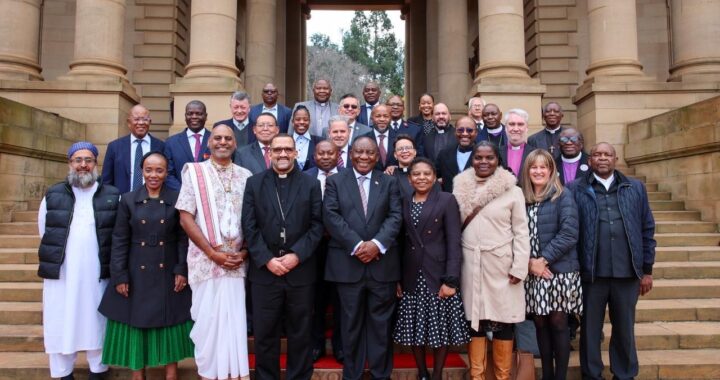
Archbishop Sipuka’s address to President Ramaphosa
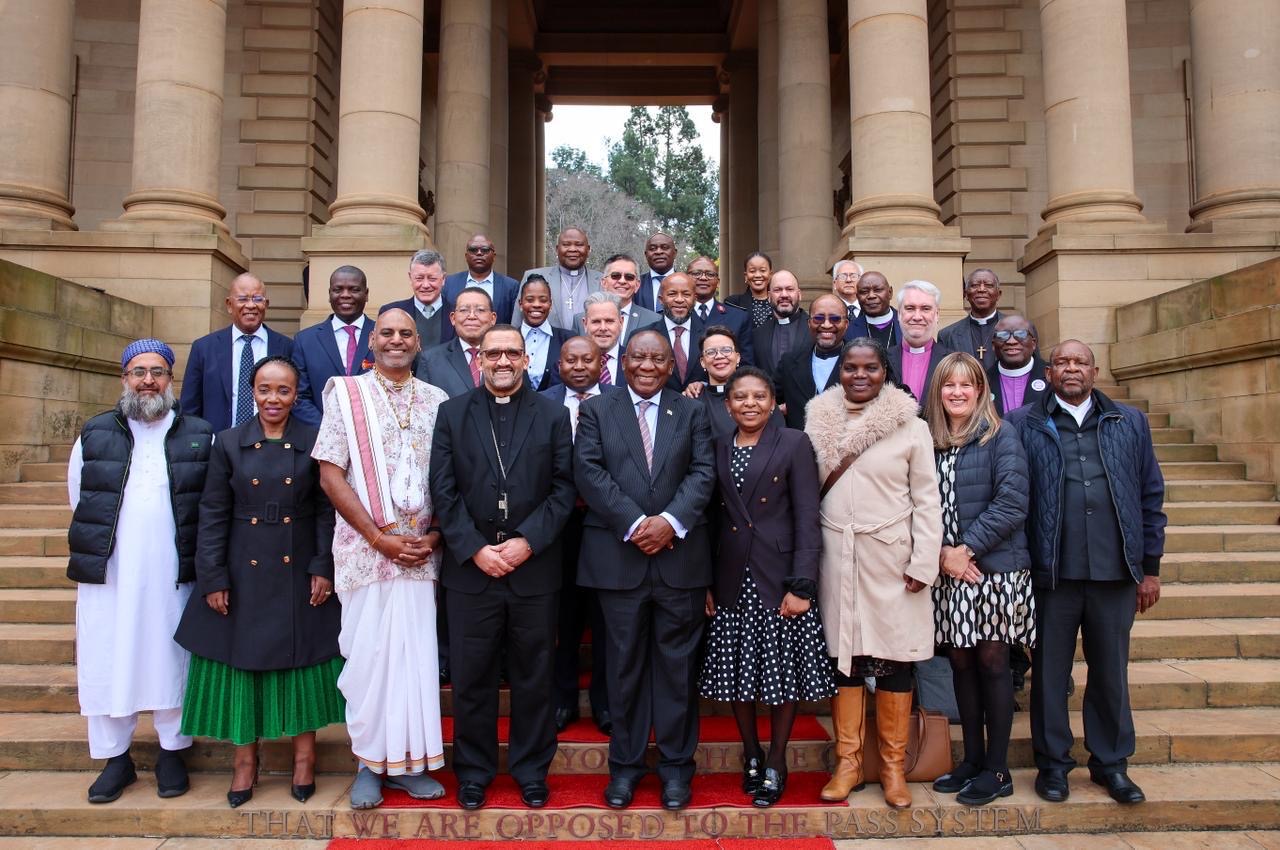
Yesterday, 17 June 2026, Archbishop Sithembele Sipuka, as president of the Southern African Council of Churches (SACC), addressed President Cyril Ramaphosa on the issue of aggression and violence against African foreign nationals. Below is his opening address. Above is a photo of the delegation, taken in front of the Union Buildings in Pretoria.
OPENING ADDRESS
South African Council of Churches
Engagement with His Excellency President Cyril Ramaphosa
On Aggression and Violence Against African Foreign Nationals
Your Excellency, President Cyril Ramaphosa, allow me first, on a personal note, to express my sincere gratitude for the kind letter of congratulations you sent upon my appointment as Metropolitan Archbishop of Cape Town. It arrived and was received with much warmth. I am settling in Cape Town and getting used to the new work.
I am grateful, on behalf of the leaders of our member churches gathered here, that you have received us on a matter that has weighed heavily on our hearts. We do not come to lecture, Mr President. We come as pastors who have been distressed by what they have witnessed across this land, and who believe that when the Church and the State walk together in good faith, a way forward can be found.
What Has Moved Us to Seek This Meeting
Your Excellency, we have watched with profound disquiet as fellow human beings — regardless of how they came to be in our country — have been hunted down, harassed, violated, their livelihoods destroyed, and their lives threatened unless they leave. This has happened, in the main, to our fellow Africans. It is inhumane. It is a violation of ubuntu. And it is an affront to human dignity, which derives not from a passport but from being created in the image of God.
We have addressed our congregations through a Pastoral Letter, reminding our people of the Scriptural injunction: “The foreigner residing among you must be treated as your native-born. Love them as yourself, for you were foreigners in Egypt.” We thank you, Mr President, for your own address to the nation on 7 June.
Hearing the Anger — Without Excusing the Violence
Mr President, we do not condone the actions of those who inflict pain on foreign nationals, and we have written strong words to them in our Pastoral Letter. Yet we hear and understand the frustration beneath their anger. Many who march worship with us on Sundays. They are people who feel abandoned — who experience the collapse of basic services, who live under the weight of unemployment, and who feel that government has been slow to hear them. Their concerns about porous borders, unlicensed trading, and unsafe goods are not imaginary, and those who raise them deserve to be heard with respect. But a real grievance, as we have told them, does not make a violent remedy right.
The Elephant in the Room
Mr President, if tomorrow every African foreign national were to leave this country, our problems would still be with us. The lack of basic service delivery would persist. Unemployment would remain. The insecurity and the drugs would remain. Because the cause is not the foreigner. The cause is the elephant in the room. In isiXhosa we say ukufa kusembizeni — the problem is in the pot itself.
That elephant is an education system that does not equip our young people to create work for themselves. It is the corruption that has hollowed out our institutions and collapsed the services on which communities depend. It is businesses that exploit foreign nationals for cheap labour to avoid paying fair wages — something you yourself noted in your address to the nation. To blame the stranger is to let these true culprits escape scrutiny.
The Failure of Law Enforcement
We are disturbed, Mr President, by consistent reports that law enforcement has turned a blind eye to much of what has unfolded, with inaction that in some cases amounts to silent complicity. Communities meant to be protected have been left to fend for themselves, while those who take the law into their own hands operate with impunity. The enforcement of law is the work of the state, not of mobs. We ask that it be enforced consistently and without favour — against those who commit violence, and equally against those in authority who look the other way.
The Exploitation of This Crisis
We are also disturbed by indications that some politicians are making of this humanitarian crisis an opportunity for political gain — using inflammatory rhetoric and manufactured panic not in the service of communities, but in pursuit of political advantage. We call on all political leaders, across all parties, to refuse to trade in the suffering of human beings.
The Timing of the Response
Your Excellency, we acknowledge your address to the nation with appreciation, but it came when things had already been allowed to get out of hand. Church leaders who gathered on 2 June brought testimonies of some two thousand affected families in KwaZulu-Natal alone, hundreds displaced, families without food, shelter, medication, or access to chronic treatment. The response must be early, not late, and it must be sustained. The commitments you have announced regarding border management, immigration administration, and labour law enforcement now require urgent, visible implementation. Announcements without follow-through restore no one’s confidence.
What This Is Doing to Our Country
Mr President, it was not so long ago that we ourselves were the ones at the door, and the African continent received us. Several African countries have already reacted with indignation to what they are seeing — and who can blame them? We risk returning to the isolation with which we were viewed during the apartheid era. And we must ask: who benefits when Africans turn upon Africans? Let us not be made instruments of any such division.
What We Are Asking of Government
Mr President, we ask that the response to this crisis be swift, visible, and sustained. That law enforcement do its plain duty and that complicity within the police service be investigated. That the true causes of our communities’ pain — unemployment, corruption, failing services, and poor border management — be addressed with the seriousness they deserve, because until they are, this anger will boil over again. That the war against lies and misinformation be waged with urgency — we commit to doing so in our own congregations. That political leaders who exploit this crisis be called to account. And that together we work toward a human, lawful, and procedural framework for managing the presence of foreign nationals — one that upholds their dignity, applies the rule of law to wrongdoers of every nationality, and reflects the constitutional democracy we fought to build.
Mr President, the stranger at our gate is not our enemy. Not so long ago, we too were strangers, and the continent received us. Let this conversation be the beginning of a better and more just way forward.
Archbishop Sithembele Sipuka
President, South African Council of Churches
Archbishop of Cape Town

Anti-Migrant Violence in SA – SACC President calls for Justice and Compassion
As anti-migrant sentiment and violence begins to rise in South Africa, SACC President, Archbishop Sithembele Sipuka, has issued a pastoral letter to all Member Churches and People of Goodwill, calling upon all to reject violence, seek justice, and treat all people with respect, compassion and dignity.
A Pastoral Letter to the Member Churches and All People of God & Goodwill

Bishops’ Statement on Violence against Migrants
Southern African Catholic Bishops’ Conference Pastoral Statement on Violence Against Migrants in South Africa
Dear Sisters and Brothers, grace and peace to you.
We, the Catholic Bishops of Southern Africa, speak at this critical moment with a deep sense of urgency and moral responsibility regarding the escalating tensions and violence involving migrants and non-nationals in South Africa.
We unequivocally and without ambiguity condemn the acts of violence, intimidation, and displacement directed at migrants and refugees. Such actions constitute a grave assault on human dignity and a betrayal of the values that should define our society. Violence against migrants can never be justified, tolerated, or accepted.
At the same time, we must also state clearly that these protests and outbreaks of violence do not arise in a vacuum. They are symptoms of deeper and longstanding failures and broken promises that can no longer be ignored. Unless these underlying causes are honestly confronted, the cycle of anger, resentment, and violence will continue to deepen.
We wish to speak plainly: failures in governance, accountability, and leadership lie at the heart of the current crisis. For too long, the cries of the poor have gone unheard. The promises of dignity, inclusion, and opportunity remain unfulfilled for many South Africans. Persistent failures in service delivery, widening inequality, and the scandal of mass unemployment have created conditions of despair and frustration.
Competition for scarce resources such as jobs, housing, and public services has further intensified tensions between locals and migrants, particularly in economically disadvantaged communities. Porous borders, corruption within the Department of Home Affairs, and irregular immigration processes have weakened public confidence in the State’s ability to manage migration effectively.
Some businesses exploit migrant labour and pit locals against migrants, while there is also a perceived monopoly enjoyed by some foreigners over the retail trade sector in townships and rural areas.
Regrettably, the involvement of a few migrants in criminal activities, such as hijacking of buildings, human trafficking, drug trafficking, and faith leaders who exploit the poor, has exacerbated tensions. Furthermore, social tensions have also been deepened by the absence of meaningful integration between some migrant communities and local communities. Greater participation in community life, respect for local customs, and efforts to learn local languages can contribute significantly to social cohesion, fraternity, and peaceful coexistence.
While these concerns and frustrations are real and must be addressed honestly, they can never justify violence against another human being. Violent attacks on migrants documented or undocumented, remain morally unacceptable and undermine social cohesion, justice, and peace.
As people of faith, we return to the foundational truth that every person is created in the image and likeness of God. This conviction imposes upon us a non-negotiable obligation to uphold and protect the dignity of all people, especially the most vulnerable members of our communities, including migrants and refugees.
As Pope Francis reminds us in Fratelli Tutti, we are called to a fraternity that transcends borders, fear, and exclusion. We cannot build a peaceful society through hatred, scapegoating, or violence.
In light of the upcoming local government elections, we offer a particular and urgent appeal to political parties and all those seeking public office: do not exploit the migration situation or the suffering of communities for political gain. The instrumentalisation of fear, division, and human vulnerability for electoral advantage is morally unacceptable and risks further destabilising an already fragile social context. Leadership demands responsibility, restraint, honesty, and a commitment to the truth.
This is a decisive moment for our nation. The future of our society depends on whether we choose the path of justice, accountability, solidarity, and social renewal, or whether we allow injustice, fear, and division to deepen.
We therefore call for a renewed commitment to the common good, rooted in justice, human dignity, solidarity, and peace. Without justice, ethical leadership, and social responsibility, there can be no lasting peace.
May the Lord grant us the courage to confront what is wrong, the wisdom to discern what is right, and the strength to act with justice, compassion, and truth.
Stephen Cardinal Brislin
President of the Southern African Catholic Bishops’ Conference
20 May 2026
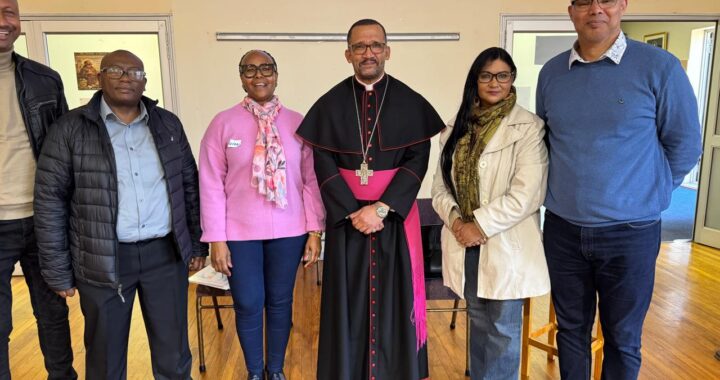
APC Meeting Pics
The first APC meeting with our new Archbishop was held at Immaculate Conception, Parow from 09.00-14.00. Below are some pics of the event.


Archbishop Sipuka reflects on the first year of Pope Leo XIV
A Reflection on the First Year of Pope Leo XIV
Stability, Mission, and the Church We Are Being Called to Be
By Sithembele Sipuka, Archbishop of Cape Town
As I write this short reflection on the first year of Pope Leo’s service as the universal pastor of the Church, I cannot help think of how providence has personally connected me to him.
He was appointed bishop in Peru while Archbishop Green was the Apostolic Nuncio there, the same Archbishop Green who had previously served as Apostolic Nuncio to the Southern African Catholic Bishops’ Conference, during whose time I was appointed bishop in 2008. He was named and made a Cardinal together with our own Cardinal Stephen Brislin. Last July, he appointed me to the Dicastery for Interreligious Dialogue, and early this year he appointed me as Archbishop of Cape Town, making me his first appointment in the SACBC territory. So, when I ask what kind of pope he is proving to be, I am not asking from a distance.
Even before these coincidences that personally link me to him, something about him touched me from the moment of his election. When he emerged at the window of the Papal Palace as the new Pope, I felt for him; he appeared so overwhelmed by what had just happened. He did and said nothing dramatic, as Pope Francis had done when he let go of the Mozzetta and asked the people to bless him before he blessed them.
Visibly overcome by emotion, and perhaps to the point of tears, he said “Peace be with you” – the very words the Risen Christ spoke when he first appeared to his disciples gathered together.
After those words, he kept a low profile, making few public statements, which made some wonder whether he was sufficiently in touch with a world that seemed to demand an immediate papal response. Reflecting on him a year later, one phrase comes to mind: “a firm but steady pope.” I think he personally felt the need to find his footing after an election he had not expected, to understand and come to terms inwardly with what had just happened to him. As he is gradually coming to terms with the reality of his election, he appears to be settling into the papacy. As he does, several priorities are emerging that I find deeply relevant to Africa and the broader southern hemisphere.
Much was made of the historical novelty of the first American-born pope in the Church’s two-thousand-year history. But what struck me, watching from Mthatha, was less the nationality than the name he chose. Leo.
The deliberate choice of the name after Leo XIII, whose 1891 encyclical Rerum Novarum positioned the Church as a moral actor amid the upheavals of industrial capitalism, indicated that this papacy would not be a papacy of institutional self-absorption. It would instead be a papacy that invites the church to engage with the world in its hopes and dreams and its struggles and failures, finding expression in its inequalities, conflicts, and displacements. The choice of the name appeared to be an invitation to recover and practice Catholic social teaching, rather than to adopt nationalistic, profit-making and geopolitical interests.
In choosing this name, he placed himself in deliberate continuity with Pope Francis, who in Fratelli Tutti pointedly asked why the death of a homeless person on the street barely registers in public consciousness, while a drop in the stock market makes front-page headlines across the world.
Then there were his first words – “Peace be with you” – which he has been gradually proving were not uttered merely as a conventional greeting but as something thoughtfully prioritised. In the months since his election, he has been consistent in calling for peace over and against war, again in continuity with Pope Francis, who called war “a defeat for humanity” and “a failure that condemns us all.”
In his appeals against armed conflict, Pope Leo has consistently highlighted the human suffering that results from wars driven by strategic interests, placing the Church firmly on the side of protecting human dignity rather than choosing sides in geopolitics. In a world where religious leaders are increasingly pressured to provide moral justification for nationalism, Pope Leo has acted for the common good of all humanity, in the spirit of Fratelli Tutti.
This same concern for human dignity has been a guiding principle in his engagement with artificial intelligence. In a world rapidly reshaped by AI-driven systems, Pope Leo has insisted that technological development must serve the human person rather than reduce or replace human dignity, agency, and relationships. He has raised particular concern about AI systems that entrench inequality, concentrate economic power in fewer hands, automate away livelihoods in already vulnerable economies, and enable forms of surveillance and social control that threaten the freedom and privacy of ordinary people.
For communities in Africa and the Global South, these are not abstract concerns. When poorly regulated AI-driven platforms displace workers in informal economies, or when algorithmic systems make decisions about credit, healthcare or justice without transparency or accountability, the consequences fall heaviest on those who are already marginalised.
Pope Leo has called for AI governance frameworks anchored in ethics rather than profit, and for a global conversation that includes the voices of the poor and vulnerable, not merely the technologically powerful. Like his predecessor, he has reminded us that technology without conscience is not progress; it is a new form of the same old indifference.
In light of fierce anti-immigration rhetoric and restrictive legislation emanating from the North, including from his own country of birth, Pope Leo has continued Pope Francis’ call to see migrants not as statistics but as people with dreams and with families. His assertion that “in every rejected migrant, it is Christ who knocks at the door of the community” (Dilexi Te) carries particular resonance here in South Africa, where immigrants are too readily made scapegoats and told to “go back” for failures of governance, for the inability of the state to deliver essential services, and for the consequences of corruption that predates any migrant’s arrival.
His language about development, inequality, and the responsibilities of wealthier societies toward vulnerable populations reflects a sensitivity drawn not from theory but from personal experience, born of years of living alongside the poor in Peru. In confronting this inequality, in his Apostolic Exhortation Dilexi Te, he repeats the words of his predecessor Pope Francis, “the dictatorship of an economy that kills, where the wealth of a few grows exponentially while the majority are left behind.”
This concern for the marginalised should find a ready echo across Africa, where, even as we rejoice in the growth of the Church, we carry the weight of unemployment, inequality, food insecurity and the social consequences of political instability. It is consoling, as we agonise over these realities in the south, to know that the universal pastor is awake to them and speaks to them.
Within the Church, Pope Leo appears to be leading with deliberate restraint. He has resisted the labels of progressive and conservative, choosing instead to be what the Gospel of Matthew calls the wise scribe of the Kingdom – one “who brings out of his treasure nova et antiqua, what is new and what is old” (Mt 13:52). He is continuing the synodal process inherited from Pope Francis while remaining cautious about developments that could fracture ecclesial unity, and in this way, he is working to keep the whole Church together.
His Augustinian formation is quietly present throughout. The spirituality of the Order of Saint Augustine, marked by interiority, communal discernment, humility before truth and restlessness before God, shapes both the texture of his public addresses and the measured quality of his governance.
Whether his approach is fully adequate to the depth of the challenges the Church faces, one year is too short a time to conclude. What can be said is that Pope Leo XIV appears to be a man for this moment, enabling the Church to engage meaningfully with the urgent questions of our time while holding it together in unity. For those of us facing our own local versions of the very same challenges, he is a source of both encouragement and direction.
The Bishops’ Foundation Newsletter
Attached below is the Bishops’ Foundation newsletter for May 2026.
[pdf-embedder url=”https://adct.org.za/wp-content/uploads/May-2026-1.pdf” title=”May 2026 (1)”]